
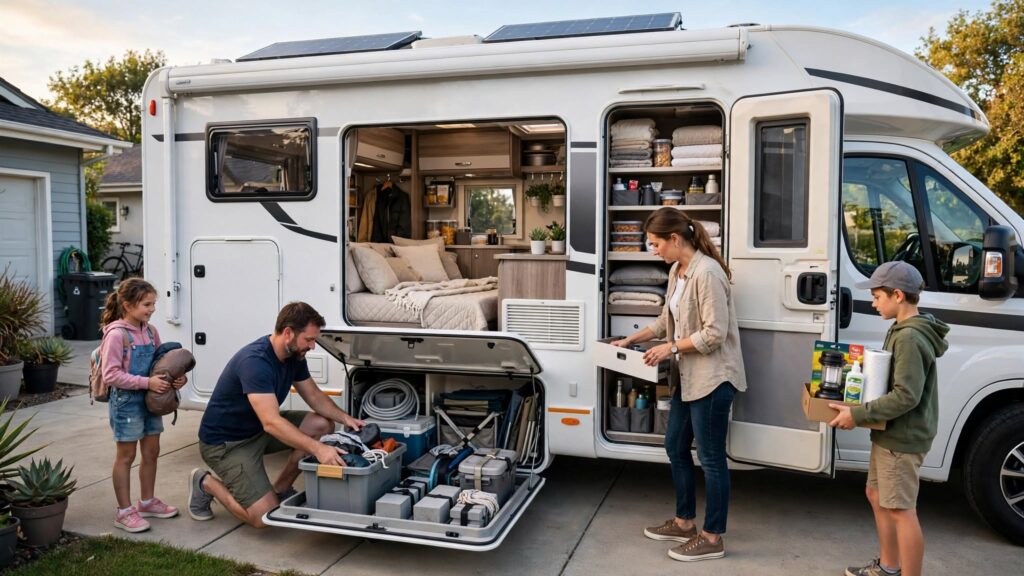
A motorhome gives you the freedom to explore while keeping many everyday comforts close at hand. But a comfortable motorhome camping trip still requires thoughtful preparation. Limited storage, changing weather, campsite facilities, water use, and driving conditions can all affect how smoothly the trip goes.
Preparing properly does not mean packing everything you own. It means understanding what your motorhome provides, choosing practical supplies, and organizing the space so daily tasks remain simple once you arrive.
Check Your Motorhome Before Leaving
A basic inspection before departure can prevent inconvenient problems later. Whether you own the motorhome or have rented one, spend some time learning how its main systems work.
Check the tyres for visible damage and appropriate pressure according to the vehicle guidance. Test the lights, indicators, windscreen wipers, mirrors, and other essential driving equipment. Inside, make sure doors, cupboards, drawers, and windows close securely so they do not move while the vehicle is in motion.
You should also understand how the motorhome’s water, electrical, heating, cooking, and waste systems operate. If you are renting, ask how to refill fresh water, connect to campsite electricity, manage wastewater, and use onboard appliances.
Secure Everything Before Driving
A motorhome is both accommodation and a moving vehicle. Items that seem stable while parked can shift during braking or cornering.
Store cookware, food containers, toiletries, electronics, and other loose belongings in secure cupboards or storage compartments. Avoid leaving heavy objects on tables, counters, or high shelves. A quick interior check before every journey is a useful habit, especially if you are moving between campsites.
Pack for Comfort Without Overloading the Space
Motorhome packing works differently from packing for a hotel stay. Space is limited, so versatile items are usually more useful than bringing several versions of the same thing.
Start with suitable clothing for the expected weather, comfortable footwear, bedding if it is not supplied, towels, toiletries, basic cooking equipment, chargers, and any personal essentials. A small torch can also be useful when walking around a campsite after dark.
Try to use storage areas logically. Keep frequently needed items within easy reach and place less-used belongings farther away. Avoid filling every cupboard before departure because you may need room for groceries, outdoor clothing, or supplies collected during the trip.
Plan Food and Kitchen Supplies Carefully
Cooking inside a motorhome can make a camping holiday more convenient, but kitchen space is usually compact. Planning a few straightforward meals before leaving can reduce unnecessary equipment and food waste.
Choose ingredients that can be used across several meals. For example, vegetables can work in breakfast dishes, sandwiches, pasta, or evening meals. Store dry foods in sealed containers and keep refrigerated products at an appropriate temperature.
Bring only the cookware you expect to use. One suitable pan, a pot, a chopping board, basic utensils, plates, cups, and cutlery may cover most simple meals. If your campsite allows outdoor cooking and you plan to use separate equipment, check the site’s rules before relying on it.
Manage Water, Electricity, and Waste
Comfort in a motorhome depends partly on managing its resources. Unlike staying at home, fresh water, battery capacity, wastewater storage, and toilet facilities may be limited.
Find out whether your chosen campsite provides an electrical hookup, fresh-water points, and approved waste-disposal facilities. Knowing this beforehand helps you decide how much you need to carry and how carefully you need to manage onboard resources.
Use Water With the Trip Length in Mind
Simple habits can make onboard water last longer. Avoid leaving taps running unnecessarily, and consider how much water is being used for washing dishes, preparing food, and personal hygiene.
Wastewater and toilet waste should always be emptied at designated facilities according to the campsite’s instructions. Understanding these procedures before the trip makes arrival and departure much easier.
Prepare for the Campsite, Not Just the Journey
Researching your destination is an important part of motorhome camping preparation. Check access conditions, pitch information, arrival and departure procedures, and the facilities available on site.
Some campsites provide extensive amenities, while others are deliberately simple. Knowing what is available helps you avoid carrying unnecessary equipment or arriving without something important.
If a dog is joining the trip, preparation should also include suitable bedding, food, water equipment, leads, and an understanding of campsite pet rules. Tips for Traveling with Dogs on a Camping Holiday can be particularly relevant when planning how your pet will fit into the journey and campsite routine.
Create a Comfortable Living Space
Small changes can make a motorhome much more pleasant once parked. After arriving, organize the interior before unpacking everything. Keep walkways clear and give frequently used items a consistent place.
Ventilation also matters in a compact living area. Cooking, wet clothing, and normal daily activities can create moisture, so use the motorhome’s ventilation features appropriately. At night, arrange bedding and personal items before you are tired rather than trying to reorganize a crowded space at bedtime.
Outdoor chairs and a small table can extend your usable living area where campsite conditions and rules permit. They also give you somewhere to relax without constantly rearranging the interior.
Keep a Few Essentials Ready for Unexpected Situations
Even a carefully planned motorhome camping trip can involve rain, delayed arrivals, forgotten supplies, or minor practical problems.
Keep essential items together where they can be reached quickly. These might include a first-aid kit, torch, charging cables, weatherproof clothing, basic cleaning supplies, important travel information, and any vehicle documents you need.
It is also sensible to keep some food that requires little preparation. If you reach the campsite later than planned, having an easy meal available can save you from immediately searching for shops or cooking something complicated.
Make Departure Part of Your Routine
Preparation continues throughout the trip, particularly when moving between locations. Before driving away, complete a consistent departure check.
Make sure windows and roof openings are properly secured, cupboards are closed, loose items are stored, external connections are disconnected, and anything placed outside has been packed away. Check that the pitch is left clean and that waste has been handled correctly.
A repeatable routine reduces the chance of forgetting something when you are eager to get back on the road.
Conclusion
A comfortable motorhome camping trip comes down to practical preparation and sensible use of limited space. Check the vehicle before departure, pack with purpose, understand the onboard systems, research campsite facilities, and keep everyday essentials organized.
Once those details are handled, the motorhome becomes easier to live in and travel with. Instead of spending your holiday solving avoidable problems, you can focus more of your time on the journey, the campsite, and the places you came to explore.